How AI Drives Customer Acquisition Through Dynamic Ads
How AI personalizes and optimizes dynamic ads to increase clicks, reduce acquisition costs, and centralize multichannel management.
Attracting customers online is expensive, especially when advertising campaigns lack precision. Traditional methods, based on static ads and manual targeting, often waste budgets without generating the expected results. Conversion rates stagnate: 9% on Facebook Ads, 4% on Google Ads.
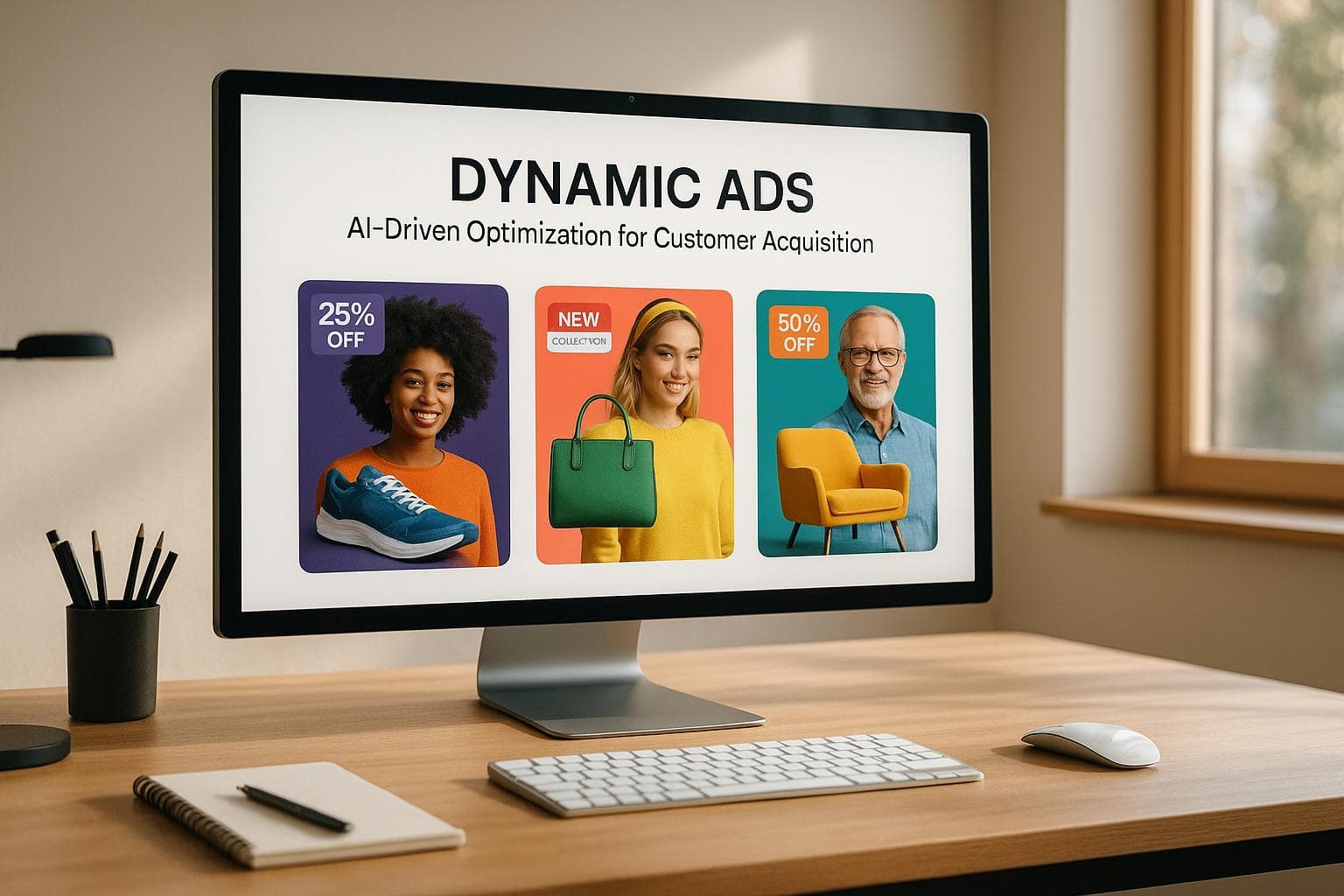
Artificial intelligence (AI) is a game changer by analyzing user behaviors in real-time to deliver personalized ads. The results?
- +34% click-through rate
- -38% cost per acquisition
- Up to 90% reduction in cost per purchase
By automating targeting, bidding, and campaign management across multiple platforms, AI simplifies operations while maximizing performance. Tools like Feedcast centralize these processes, allowing for precise tracking and continuous optimization, even with modest budgets.
Key Points:
- Problems with Traditional Methods: broad targeting, generic ads, complex management.
- Benefits of AI: personalized ads, automatic optimization, centralized management.
- Measurable Impact: improved ROI, time savings, more effective campaigns.
AI is no longer a luxury but an essential lever to boost your e-commerce advertising campaigns.
Master Ad Creation with AI: From Canva to Facebook Ads [ Part 3 ]
Common Problems in E-commerce Customer Acquisition
Now that we have identified the limitations of traditional methods, let's dive into the specific challenges faced by e-commerce merchants.
Manual Targeting Wastes Advertising Budget
Manual targeting often leads to resource waste. By targeting audiences unlikely to buy, advertisers squander their budget on leads with little interest in their products. Without real-time analysis of user behaviors, ads end up reaching poorly targeted individuals. The result: skyrocketing customer acquisition costs (CAC) and disappointing click-through rates.
Data confirms this: average conversion rates remain low, highlighting how ineffective traditional campaigns are. In contrast, companies adopting AI-driven strategies see notable changes. For example, AI-optimized dynamic ads can generate a 34% increase in click-through rates and a 38% reduction in cost per acquisition[2].
The real problem with manual targeting is its inability to detect high-intent buyers. Companies continue to spend on unpromising audience segments instead of focusing their efforts on genuinely interested prospects. This lack of precision ultimately weighs heavily on campaign profitability.
But targeting isn’t the only issue: static ads also pose a serious obstacle.
Static Ads Fail to Engage Users
Static ads take a one-size-fits-all approach, delivering the same message to everyone without considering user preferences or purchasing behavior. Imagine an internet user who recently searched for running shoes receiving the same ad as someone interested in winter coats. This lack of relevance prompts users to ignore these ads or even block them.
Personalization changes the game. Dynamic ads, which adapt to the specific needs of users, far outperform static ads in terms of engagement and cost per acquisition. In contrast, traditional approaches are marked by their inability to personalize content.
Another problem with static ads is ad fatigue. Users, exposed to the same repetitive content, eventually ignore these messages. Unable to adjust in real-time, these ads cannot modify their content based on user reactions.
According to a study, 78% of consumers are more likely to repurchase when they receive personalized content[6]. This underscores the gap between today's buyers' expectations and what static ads can offer. Companies that persist in using generic messages and unattractive visuals miss out on huge conversion opportunities.
But that’s not all: managing campaigns across multiple platforms adds an extra layer of complexity.
Managing Multiple Platforms Creates Complexity
Running campaigns on Google, Facebook, or Instagram without centralized tools significantly complicates operations. Each platform requires distinct configurations, separate product feeds, and independent dashboards, fragmenting the entire process.
This fragmentation leads to several problems. For example, product data can become inconsistent from one platform to another, disrupting users and reducing the effectiveness of advertising campaigns.
Performance tracking also becomes a headache. Teams must juggle different interfaces to identify which channel offers the best return on investment. This disconnected approach prevents leveraging holistic analytics that could improve results.
Every update, whether it’s a price, description, or image, must be manually replicated across each platform. This not only increases the risk of errors but also consumes valuable time.
Ultimately, marketing teams waste hours on administrative tasks instead of focusing on more effective strategies. For instance, synchronizing audience segments between Facebook and Google Ads requires constant adjustments, as what works on one platform doesn’t directly translate to another.
This complexity leads to missed opportunities. Without a unified overview, companies struggle to quickly reallocate their budgets to the most effective channels or identify new trends before it’s too late.
How AI-Powered Dynamic Ads Solve These Problems
Artificial intelligence is revolutionizing the world of e-commerce advertising. By combining machine learning and automation, AI-powered dynamic ads overcome the limitations of traditional methods while delivering concrete and measurable results.
AI Targets the Most Likely Buyers
Through constant analysis of user behavior, AI identifies consumers with high purchase intent. Unlike manual targeting, often based on assumptions or rigid audience segments, AI relies on precise data such as browsing history, conducted searches, previous interactions with a brand, and engagement habits across various platforms[2][5].
For example, if a user clicks on an ad for running shoes, AI recognizes them as a potential buyer in the sportswear category. It then automatically suggests complementary products[2]. This system continuously monitors behaviors to identify the most relevant items, allowing companies to display ads perfectly tailored to each profile[5].
AI goes even further by detecting micro-segments. For instance, it can identify a group of fitness enthusiasts aged 25 to 34, primarily active in the evenings, and automatically generate personalized videos from existing resources to target them effectively[2]. This level of precision significantly reduces unnecessary spending on poorly qualified audiences.
A retailer that adopted this automated approach reduced its cost per acquisition by nearly 90% by reallocating its budget towards AI-driven campaigns[2]. By accurately identifying potential buyers, these tools allow for continuous optimization of ads.
AI Improves Ad Creatives in Real-Time
AI doesn’t just deliver ads; it continuously tests and optimizes formats, visuals, and messages to maximize their impact. By automatically adjusting thumbnails, titles, and calls to action, it ensures constant optimization based on real-time data[2].
Brands that adapt their ads mid-campaign using AI see an 18% increase in return on investment compared to those using fixed creatives[2].
A concrete example: a retail brand observed an increase in clicks on carousel videos and immediately redirected 30% of its daily budget towards this format. The result: a 12% decrease in cost per acquisition in just one weekend[2].
AI can also generate thousands of creative variations in minutes, allowing for large-scale personalization[4]. Instead of manually creating dozens of versions tailored to different segments, AI automatically produces targeted content. For example, a user who viewed running shoes will see ads featuring those shoes along with complementary items like socks or fitness accessories, thus increasing the chances of conversion[4].
In one campaign, AI-optimized video creatives led to a 22% increase in engagement compared to static images[2]. In addition to content optimization, automation simplifies advertising management across multiple channels.
Centralized Platforms Facilitate Multichannel Management
Managing campaigns on Google, Meta, and Microsoft Ads from a single interface is a game changer. Centralized platforms, like Feedcast, connect all advertising accounts to a single dashboard. This allows for effortless performance tracking and campaign adjustments across all channels[2].
These tools also simplify product data management. Companies can import their catalogs from platforms like Shopify, WooCommerce, or Prestashop, or via files like Google Sheets, CSV, or XML. AI then enriches this data by optimizing titles, descriptions, and other attributes, improving visibility and advertising performance[2].
One of the main advantages is the elimination of fragmentation. Unified analytics provide real-time metrics and detailed reports, enabling rapid and effective strategy adjustments[2].
Every price, description, or image update is automatically synchronized across all platforms, avoiding manual errors and freeing up time for marketing teams. This allows them to focus on strategic tasks rather than repetitive operations.
For example, Feedcast offers intelligent targeting combined with automatic bidding and 24/7 budget optimization. This has led to a 64% increase in advertising return on investment in automatic mode[1]. The platform shows an average ROAS of 4.2x, proving the effectiveness of this centralized approach[1].
In addition to all this, these systems allow for near-instant budget reallocation. Instead of waiting several days to adjust funds between different channels, AI redistributes budgets in minutes based on real-time performance[2]. This flexibility ensures that every euro invested is used optimally.
sbb-itb-0bd1697
Concrete Results from AI-Powered Dynamic Ads
AI-driven advertising campaigns show impressive results: better return on investment, increased conversions, and valuable time savings for marketing teams.
Better Advertising Return on Investment (ROAS)
With AI, advertising budgets are automatically directed towards the audiences most likely to convert. The result: less waste and more revenue for every euro spent. For example, AI-driven campaigns show double the click-through rate and a 50% reduction in acquisition cost compared to static ads[3].
According to the Next in Personalization study by McKinsey, advanced personalization can lead to a 10-15% increase in revenue[2]. With a system that adjusts bids and budgets in real-time, every euro invested is optimized for maximum impact.
Platforms like Feedcast exemplify this efficiency. By combining intelligent targeting, automatic bidding, and continuous optimization, Feedcast achieves an average ROAS of 4.2x. Users can even see gains of up to 64% in automatic mode and an additional 23% thanks to AI targeting[1].
Moreover, as a certified Google CSS partner, Feedcast allows for a 20% reduction in Google Shopping CPC bids. For example, a CPC of €0.85 drops to €0.68, increasing traffic without exceeding the initial budget[1].
These financial results are accompanied by a notable improvement in conversions and customer engagement.
More Conversions and Customer Engagement
Real-time personalization is a true asset for advertising performance. By adapting ads to individual preferences, AI generates more clicks, prolonged engagement, and higher purchase rates.
AI continuously analyzes user behaviors, such as browsing history or searches, to propose messages and products that perfectly match their interests[2][4]. This level of precision creates a smooth and relevant experience conducive to conversion.
Brands that adjust their ads mid-campaign using AI record up to 18% additional ROI compared to those using fixed creatives[2]. A striking example: a retail brand noted a 22% increase in engagement on videos compared to static images, just hours after launching an AI campaign[2].
AI doesn’t just suggest products. It also recommends complementary items. For example, a user interested in running shoes might see sports socks or fitness accessories, thus increasing the average cart value[4].
Intelligent retargeting is another powerful lever. AI targets users who have shown interest without completing their purchase, with personalized ads to re-engage them[5]. These already aware audiences often display higher conversion rates than cold prospects.
Finally, dynamic pricing models further enhance performance. AI adjusts prices in real-time based on customer behaviors, demand, and competition, offering personalized discounts at the right moment to attract price-sensitive buyers[5].
Less Manual Work, More Time for Strategy
In addition to improving results, automation reduces the need for manual tasks, allowing marketing teams to focus on strategic initiatives rather than operational details.
Yohann B.