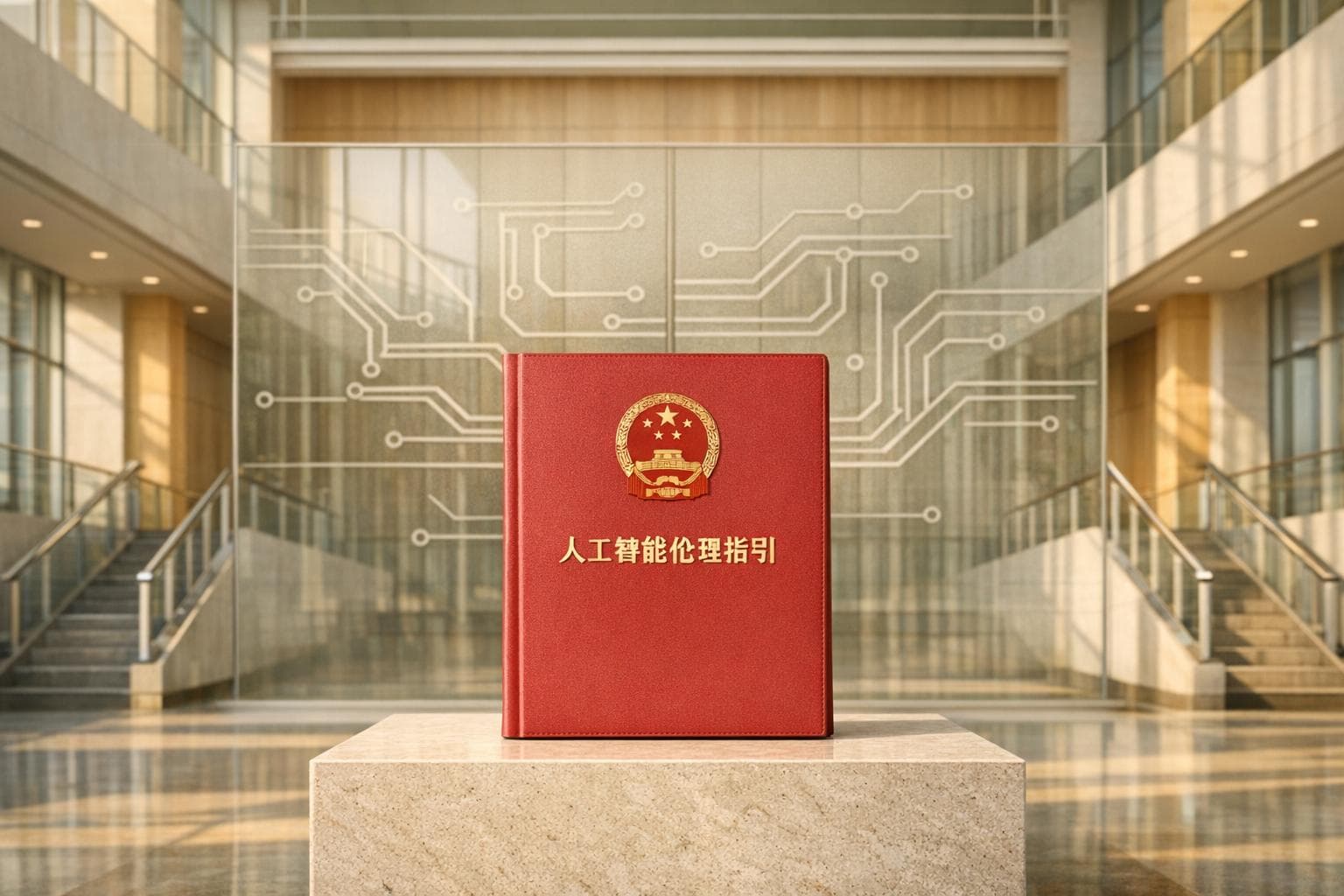
China Adopts New Ethical Rules for Scientific Activities in Artificial Intelligence
China publishes ethical guidelines to regulate scientific and technological activities related to AI.
China has recently introduced provisional ethical rules to regulate scientific and technological activities related to artificial intelligence (AI). These new measures, issued by the Ministry of Industry and Information Technology in collaboration with nine other departments, aim to strengthen ethical governance in the field of AI.
Rules Covering All Aspects of AI Activities
Titled "Measures for the Review and Ethical Services in AI Science and Technology (Trial)," these guidelines establish ethical review procedures for scientific and technological activities in AI conducted in China. They apply to activities that may pose ethical risks related to human dignity, public order, life and health, ecological environment, or sustainable development.
The measures emphasize the integration of ethical requirements throughout the process of AI activities. They outline fundamental principles such as promoting human well-being, respecting life and rights, fairness and justice, reasonable risk control, transparency, privacy protection, and reliability.
Supporting Responsible Innovation
The text also highlights the importance of increased support to ensure safe and responsible innovation. It calls for the enhancement of ethical standards in AI, including international, national, industrial, and group standards. The measures include initiatives to strengthen risk monitoring, testing, certification, and consulting services.
Additionally, specific actions are planned to assist small and micro-enterprises, promote the orderly opening of high-quality datasets, develop risk assessment and audit tools, and train specialized talents in AI ethics.
Roles of Institutions and Ethics Committees
Universities, research institutions, medical and health establishments, as well as companies involved in AI activities are now required to manage ethical reviews within their own organizations. These entities must also establish dedicated ethics committees.
Furthermore, local authorities and relevant departments may set up specialized centers offering review, re-review, training, and consulting services. However, these centers are not allowed to conduct both the initial review and the re-review for the same AI activity.
Review Procedures and Timelines
The rules detail several review procedures, including general processes, simplified procedures, expertise for re-reviews, and emergency procedures. Decisions on ordinary reviews must be made within 30 days of acceptance, although this timeframe may be extended for complex cases. In emergency situations, a review must be completed within 72 hours.
Particular attention is given to integrated human-machine systems that have a strong influence on human behavior, emotions, or health, as well as algorithmic models and systems capable of mobilizing or guiding social consciousness. Highly autonomous automated decision-making systems used in scenarios presenting risks to safety or health are also subject to strict monitoring.
Sanctions for Violations
Violations of the measures may be reviewed and sanctioned under existing laws, such as the Cybersecurity Law, the Data Security Law, the Personal Information Protection Law, and the Scientific and Technological Progress Law. According to the text, these new rules take effect immediately upon publication.
By adopting these guidelines, China reaffirms its commitment to the ethical and responsible development of artificial intelligence technologies, in a context of rapid advancement and growing concerns about their societal impact.
Yohann B.